Architectural layouts are traditionally drawn, line by line, room by room, decision by decision. Every wall, every connection, every proportion is manually composed.
But what if, instead of drawing a single layout, you could define a system that generates many?
What if the role of the designer shifted from creating a solution to designing the logic behind solutions?. This is where procedural layout generation begins
Procedural Layout Generation
Procedural layout generation is a way of designing spaces where the designer does not draw the layout directly. Instead, they define a set of rules, relationships, and constraints, and the layout is generated from this logic.
In simple terms, it is the shift from designing a plan to designing a system that produces plans.
This changes the role of the designer from composing geometry directly to constructing a framework that can generate multiple valid outcomes.
Types of Procedural Layout Generation
1. Subdivision-Based Systems
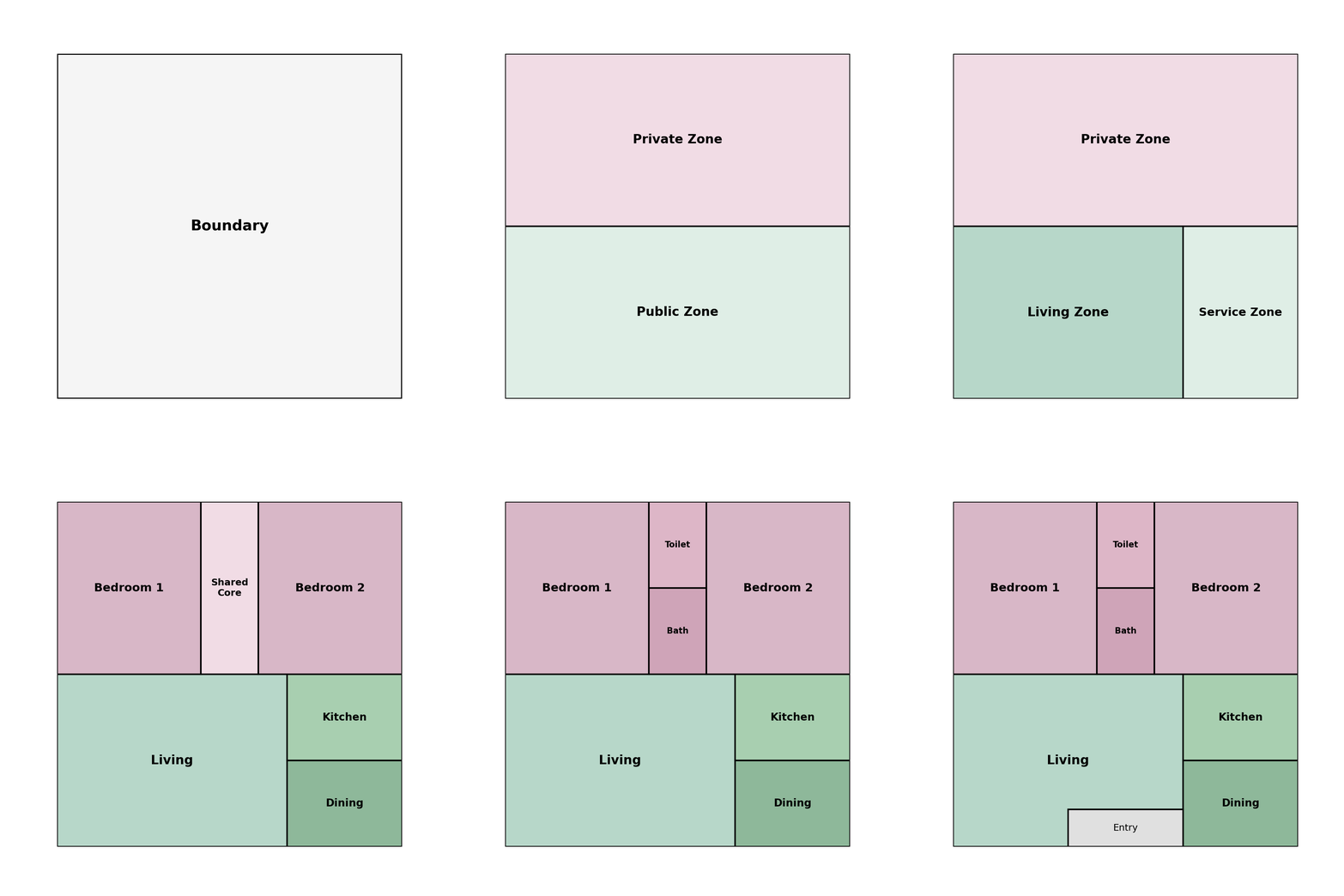
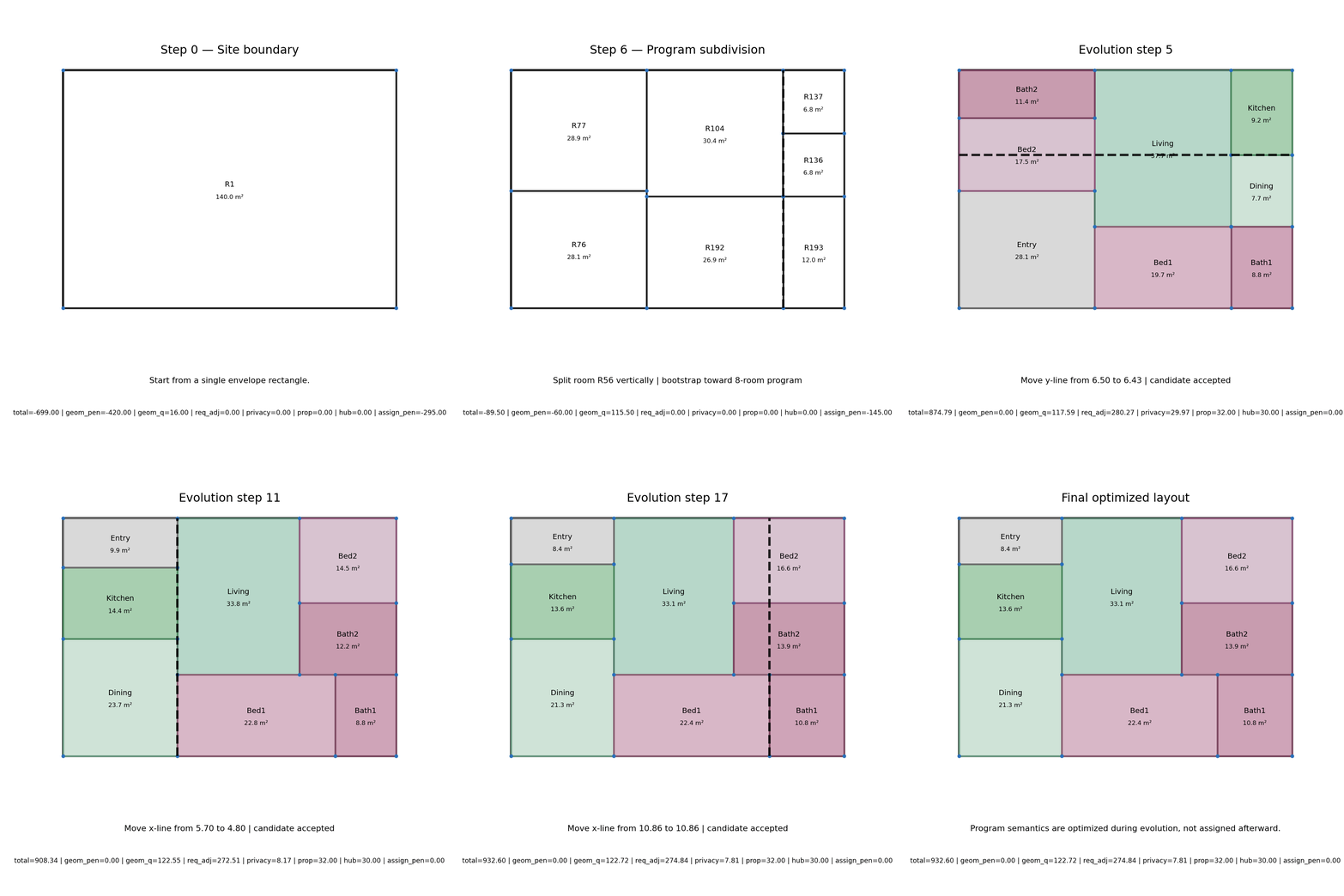
These systems begin with a boundary. such as a site, floor plate, or volume and progressively divide it into smaller parts.
The process is typically hierarchical: large space → zones → rooms → subspaces.
Rules guide how and where divisions occur. These may include proportions, adjacency preferences, or minimum area requirements.
The key idea is that structure emerges from controlled fragmentation.
2. Graph-Based Systems
Design through relationships
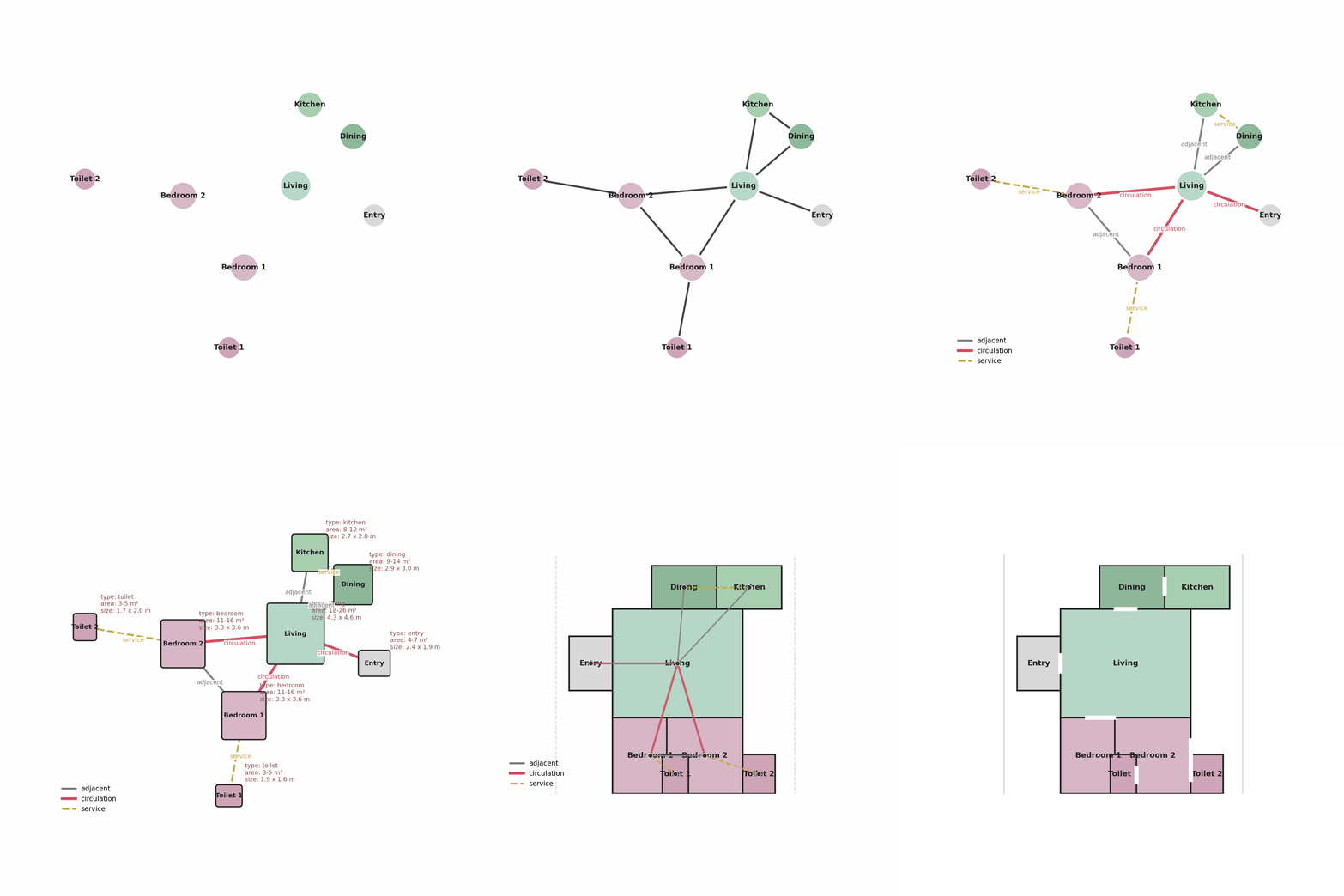
Graph-based systems start with relationships rather than geometry.
Spaces are defined as nodes, and their connections (adjacency, access, visibility) are defined as edges. The layout is then generated by translating this relational structure into spatial form.
This approach separates what connects to what from how it looks, allowing designers to prioritize logic before geometry.
3. Grid / Cellular Systems
Design through local interactions
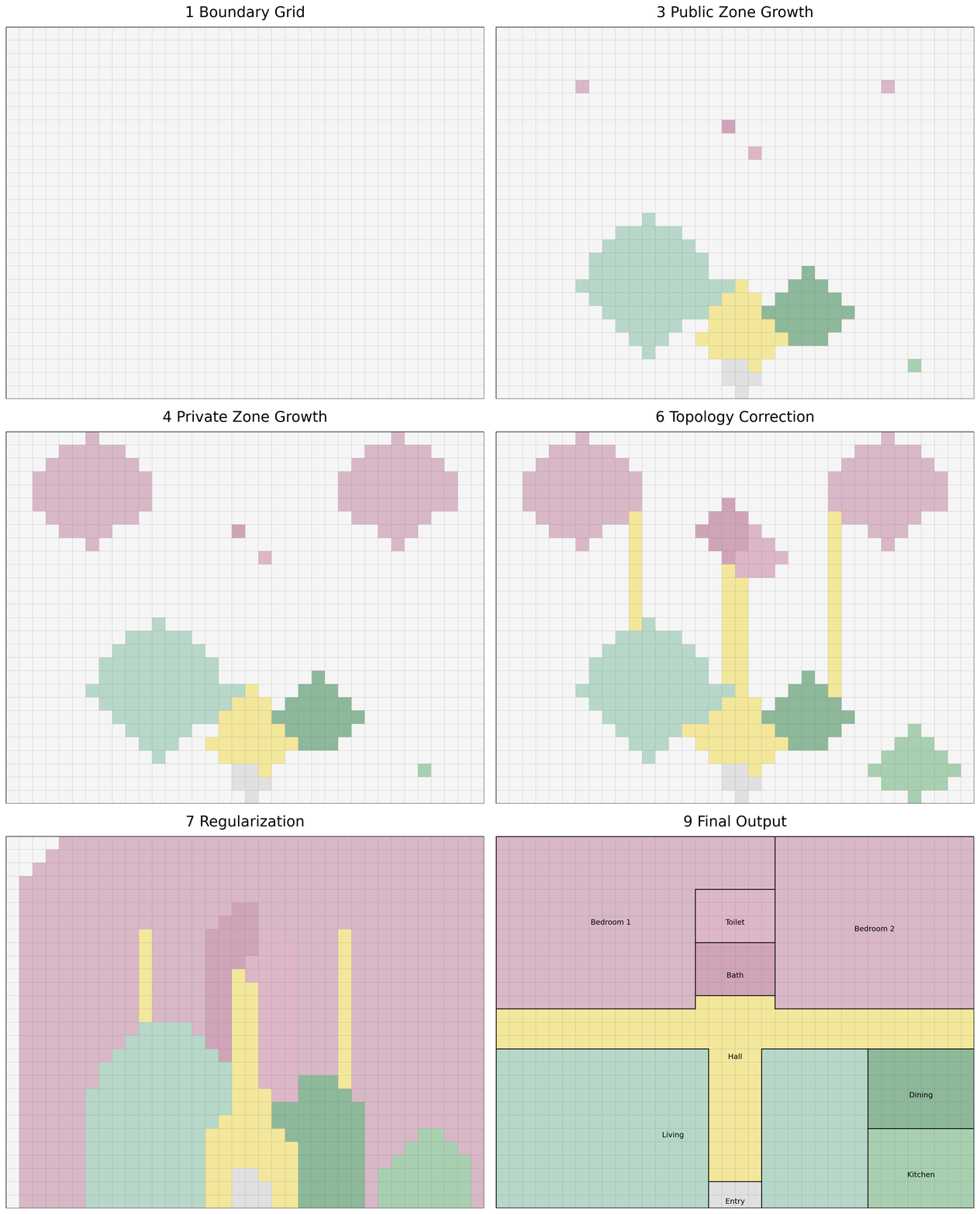
In these systems, the site is divided into a grid of cells. Each cell follows simple rules based on its neighbours.
For example:
• A cell may become circulation if adjacent to an entry
• A cell may become a room if surrounded by enclosed cells
Complex layouts emerge from these local interactions. The overall form is not directly designed it is the result of many small decisions.
This makes the system particularly effective for simulating organic or emergent spatial patterns.
4. Shape Grammar Systems
Design through rule-based transformations
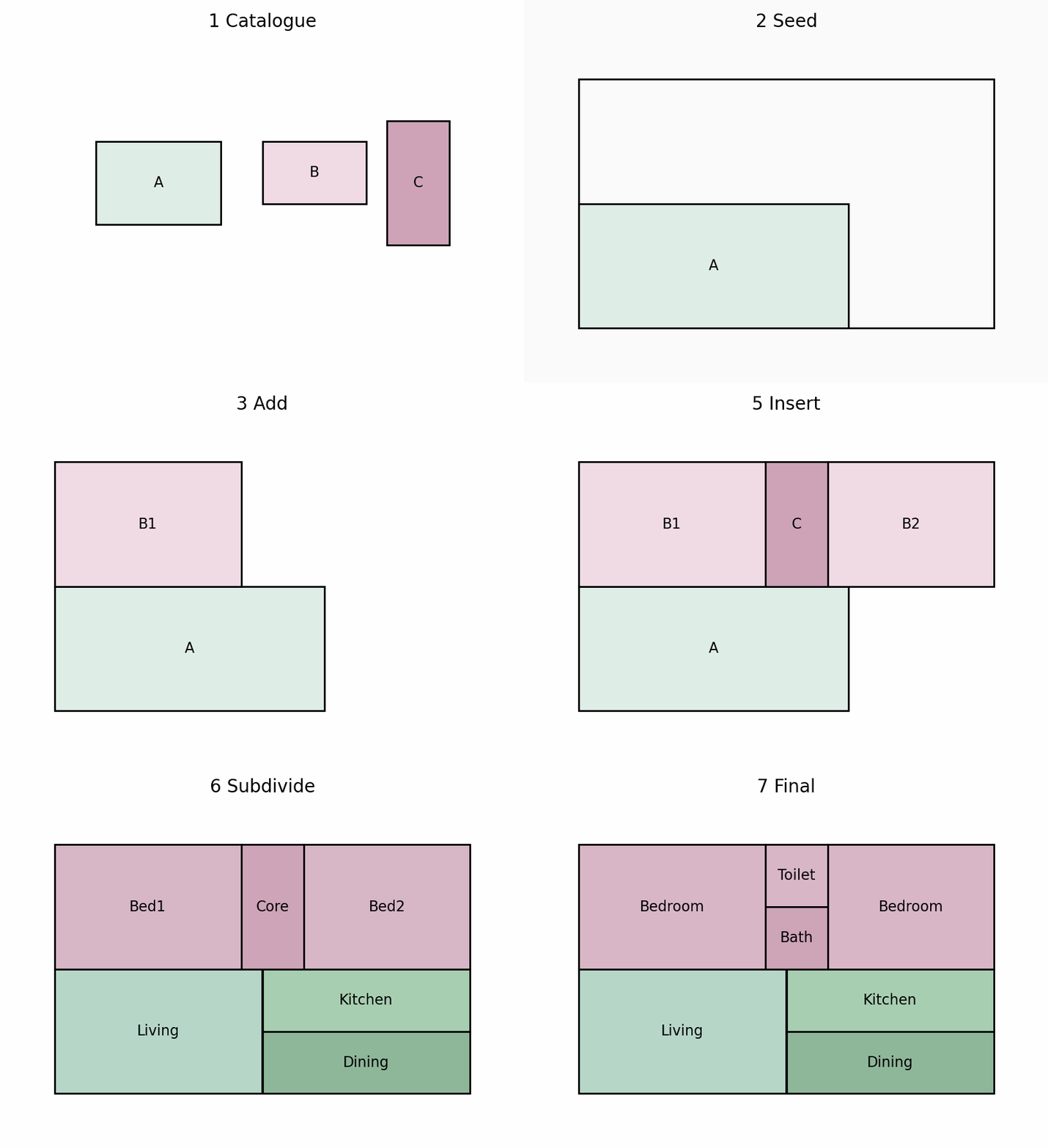
Shape grammar systems generate layouts by applying transformation rules to geometry.
Each rule performs an operation such as:
• add
• remove
• extend
• subdivide
These rules are applied sequentially, often in multiple iterations, producing increasingly complex configurations.
The strength of this approach lies in its ability to encode a design language capturing stylistic or typological patterns within a rule set.
5. Constraint-Based Systems.
Design through evaluation and conditions
Constraint-based systems focus on validating layouts against predefined rules.
Instead of prescribing exactly how a layout should be generated, the system evaluates whether a layout satisfies certain conditions, such as:
• minimum room sizes
• maximum travel distances
• adjacency requirements
• regulatory compliance
A layout is either accepted, rejected, or optimized based on how well it meets these constraints.
These systems are particularly powerful when combined with other methods. For example, a subdivision system may generate layouts, while a constraint system filters or scores them.
The key shift here is from generation to evaluation.
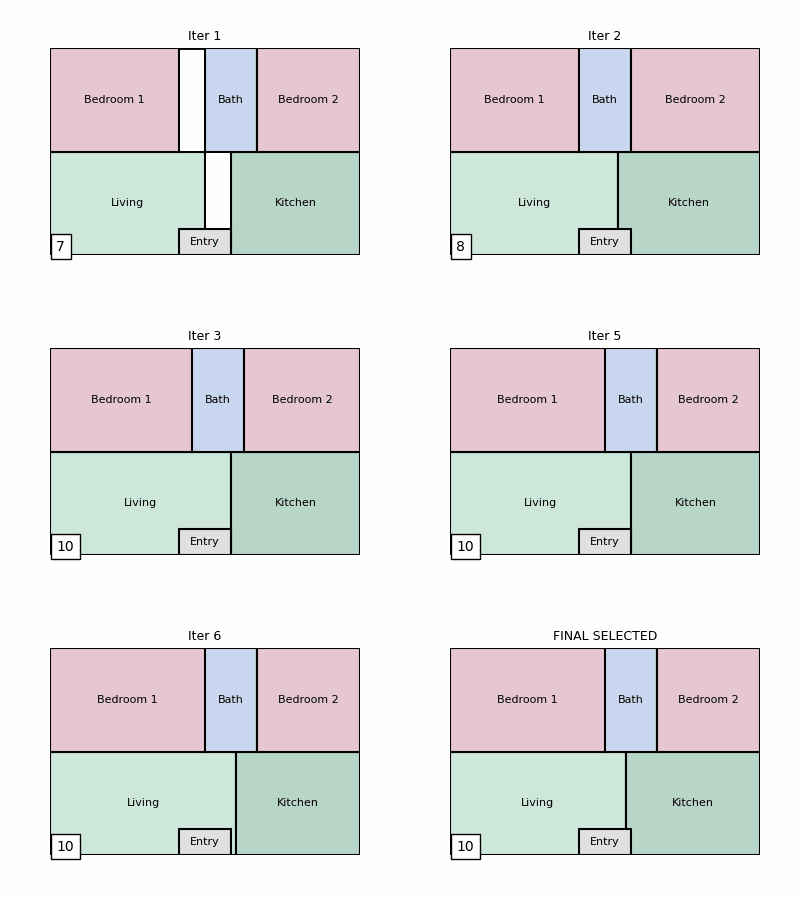
6. Evolutionary / Generative Systems
Design through iteration and improvement
These systems generate not just one layout, but many.
Each layout is evaluated based on performance criteria—such as efficiency, circulation, daylight, or compliance. The best-performing layouts are then used to generate new variations.
Over multiple iterations, the system evolves toward better solutions.
This approach mirrors natural selection: variation → evaluation → selection → repetition
It is especially useful when dealing with complex, multi-objective design problems where no single “correct” solution exists.
Why Procedural Layout Generation Matters?
Procedural systems fundamentally change how design problems are approached.
They allow designers to:
• explore large solution spaces quickly
• maintain consistency across complex projects
• embed logic directly into the design process
• generate variations instead of single outcomes
In a field where constraints are increasing regulations, performance metrics, data integration. procedural approaches provide a scalable way to manage complexity.
More importantly, they enable a shift from static design to adaptive systems.
Basic Workflow
At its core, procedural layout generation follows a simple structure:
- Input
• Site boundary
• Program requirements
• Spatial constraints - Rules / Logic
• Subdivision rules
• Relationships
• constraints and conditions
• transformation operations - Output
• One or multiple generated layouts
• Evaluated or optimized solutions
This pipeline can be expanded, combined, or looped depending on the system.
Use Cases
Architecture
• Housing layouts
• Office planning
• Space optimization
• Early-stage design exploration
BIM and Compliance
• Automated rule checking
• Code-based layout validation
• safety and circulation analysis
Urban Design
• Block subdivision
• zoning simulations
• density studies
Games and Simulation
• procedural cities
• interior layouts
Across these domains, the common thread is the need to generate structured spatial configurations efficiently and consistently.
Closing Insight
Procedural layout generation does not reduce the importance of the designer. It changes where the design work happens.
Instead of drawing one fixed solution from the beginning, the designer builds the logic behind it: what should connect, what should stay apart, what can change, and what must remain constant. The focus shifts from only making form to also shaping the system that produces form.
This becomes especially relevant in architecture today, where projects are influenced by performance demands, regulations, data, and increasing levels of complexity. In that context, procedural methods are useful not because they replace design thinking, but because they make it easier to test, adapt, and manage it.
What matters is that the designer still decides the intent. The rules are not the design by themselves. They are a way of organising decisions, exploring variations, and handling complexity with more clarity.
So procedural design is not the end of creativity. It is another way of practicing it.
References
Stiny, G. (1980). “Introduction to Shape and Shape Grammars.” Environment and Planning B: Planning and Design, 7(3), 343–351.
Terzidis, K. (2006). Algorithmic Architecture. Oxford: Architectural Press. In the opening section, Terzidis discusses how algorithmic design shifts the architect’s role from “architecture programming” to “programming architecture,” which is directly relevant to your argument.
Frazer, J. (1995). An Evolutionary Architecture. London: Architectural Association.
Eastman, C., Teicholz, P., Sacks, R., & Liston, K. (2008). BIM Handbook: A Guide to Building Information Modeling for Owners, Managers, Designers, Engineers, and Contractors. Hoboken, NJ: Wiley. The book explicitly discusses model-based compliance checking, code requirements, and circulation/design validation, which supports your section on BIM and compliance.
Eastman, C., Lee, J.-m., Jeong, Y.-s., & Lee, J.-k. (2009). “Automatic Rule-Based Checking of Building Designs.” Automation in Construction, 18(8), 1011–1033.
Solihin, W., & Eastman, C. (2015). “Classification of Rules for Automated BIM Rule Checking Development.” Automation in Construction, 53, 69–82. DOI: 10.1016/j.autcon.2015.03.003.