Introduction
Early-stage space planning in architecture is often driven by intuition. Designers sketch zones, test arrangements, and gradually refine layouts based on experience and requirements. While this process is effective, it is difficult to formalize or evaluate systematically.
This article examines a different approach. Instead of beginning with predefined rooms, it focuses on how a single floor plate can be divided into smaller regions using simple computational methods. The aim is not to generate finished designs, but to understand how spatial structure can emerge from rule-based subdivision.
The work presented here is based on a small system developed to visualize how different subdivision strategies operate step by step.
Space Subdivision in Context
Space subdivision refers to the process of dividing a continuous area into smaller regions according to a set of rules.
In architectural terms, these regions are not immediately defined as rooms. They are better understood as candidate spatial units. At a later stage, they may be assigned functions such as living areas, circulation zones, or service spaces.
It is important to note that subdivision operates at a preliminary level. It does not address materiality, structure, or detailed design. Its role is limited to organizing space in a clear and structured manner.
Methods of Subdivision
The study focuses on four basic approaches. Each method produces a different type of spatial organization.
1. Binary Space Partitioning
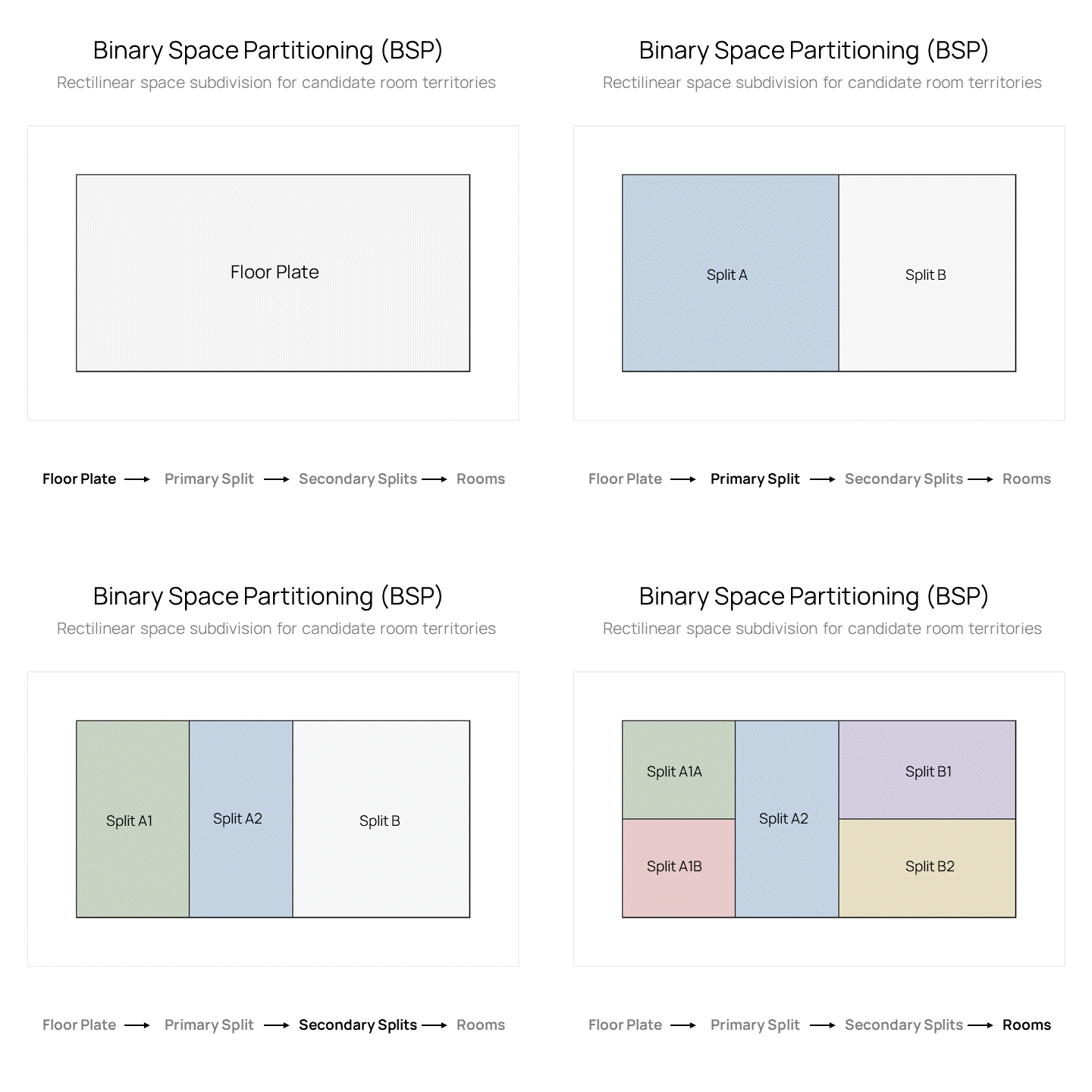
Binary space partitioning divides a floor plate into two parts and continues this process recursively.
The sequence is simple. A large rectangular area is split into two smaller regions. One or both of these regions can then be divided again. The process continues until the resulting regions reach a desired scale.
This method produces orthogonal layouts with clear boundaries. Because the subdivisions follow a rectilinear logic, the resulting spaces are easy to interpret and adapt.
Binary partitioning is particularly suitable where regular room shapes are required and where control over proportions is important.
© Naveen Maria Fleming / ArchitectsWhoCode
2. Recursive Subdivision
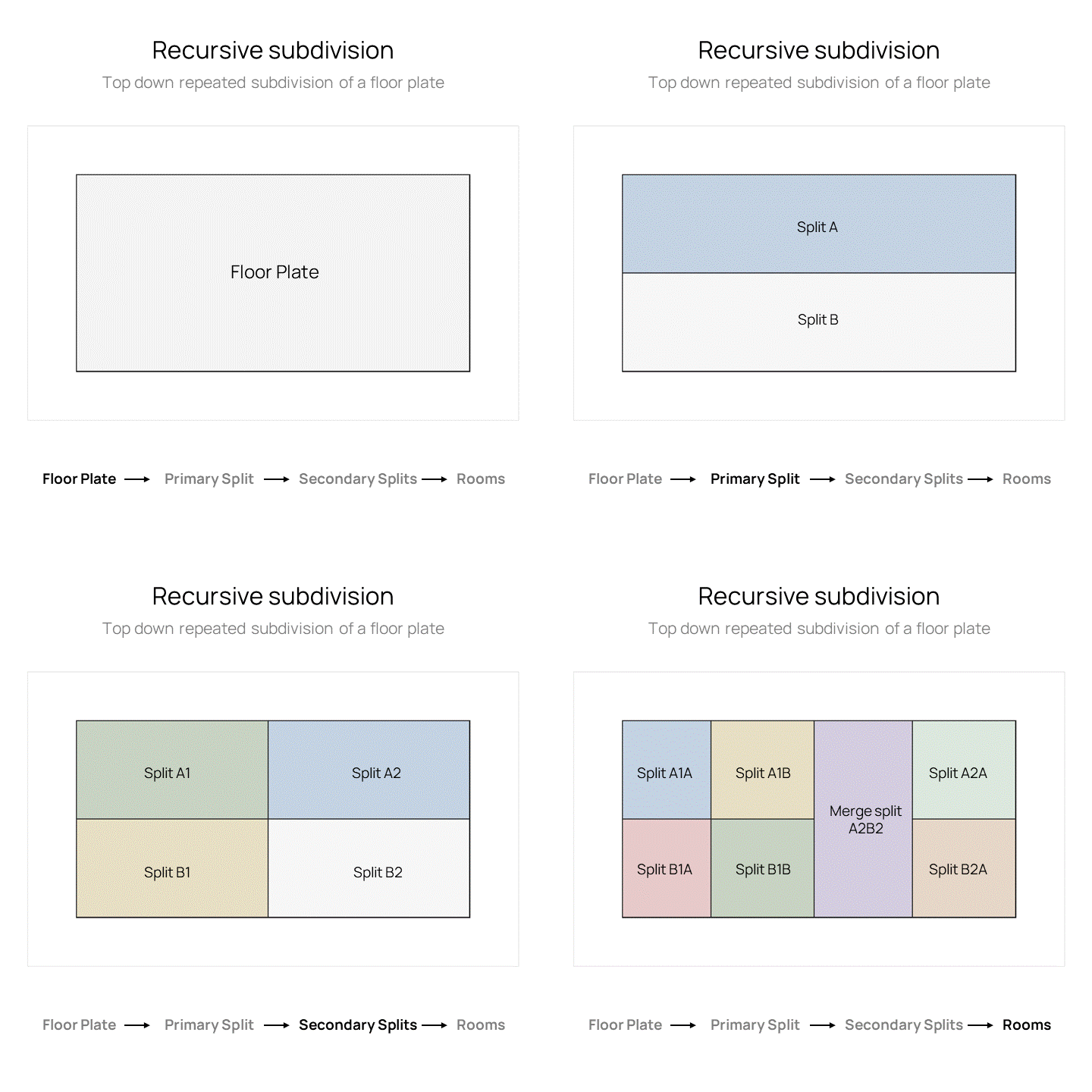
Recursive subdivision follows a similar process but emphasizes hierarchy rather than geometry alone.
The floor plate is treated as a parent region. This region is divided into smaller child regions, which may then be subdivided further. Each stage of subdivision reflects a level within a hierarchy.
This approach aligns more closely with program-based thinking. Larger regions can represent primary functions, while smaller subdivisions can correspond to secondary or supporting spaces.
As a result, recursive subdivision is useful when spatial organization is driven by relationships between functions rather than by geometric constraints alone.
© Naveen Maria Fleming / ArchitectsWhoCode
3. Grid-Based Subdivision
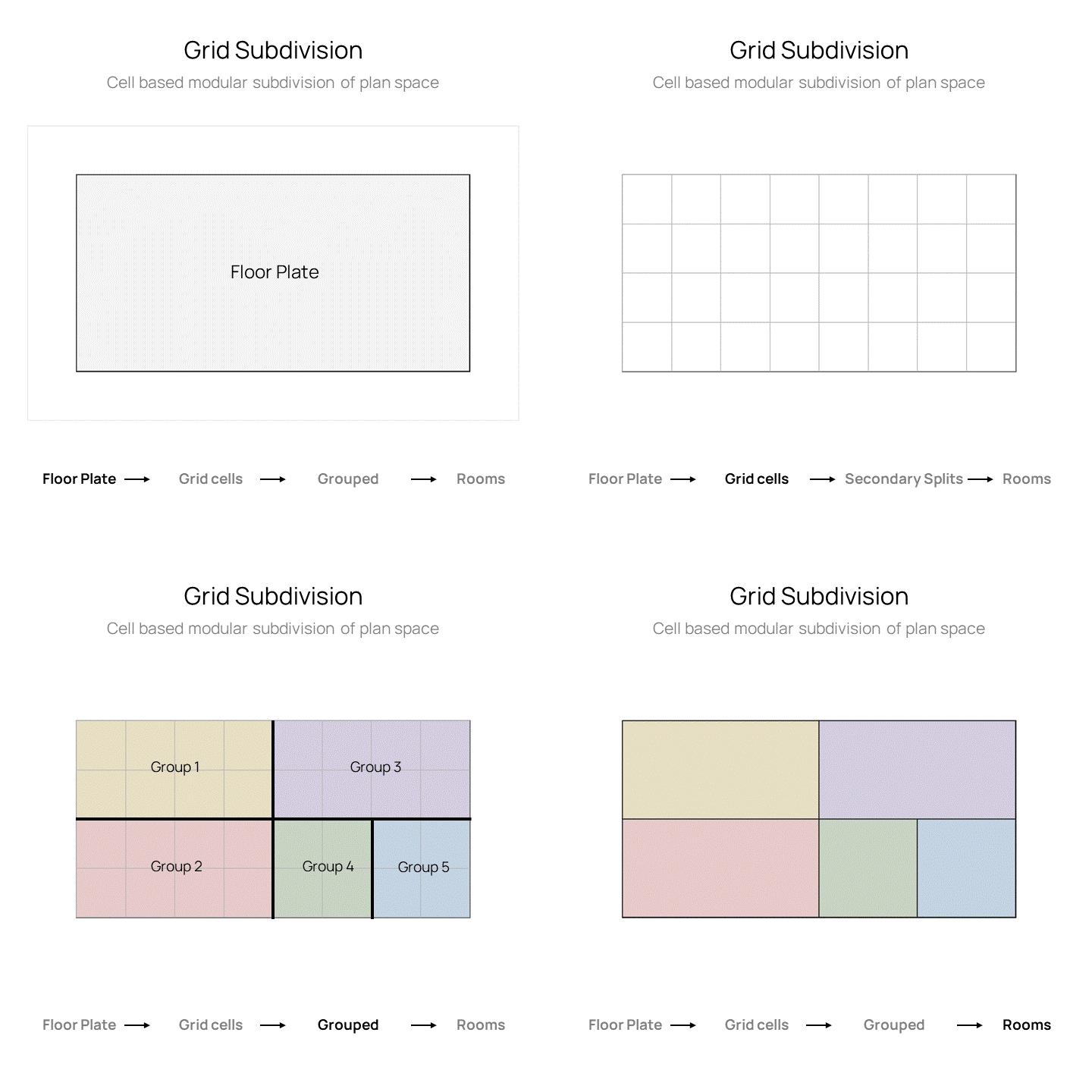
Grid-based subdivision introduces a fixed structure before any division takes place.
A grid is overlaid on the floor plate, dividing it into equal cells. These cells can then be grouped and merged to form larger regions.
This method offers a high degree of control. Dimensions are consistent, alignments are clear, and spatial relationships can be managed through simple grouping operations.
Grid-based approaches are commonly associated with modular design systems. They are particularly relevant in housing, office layouts, and other contexts where repetition and standardization are required.
© Naveen Maria Fleming / ArchitectsWhoCode
4. Voronoi-Based Subdivision
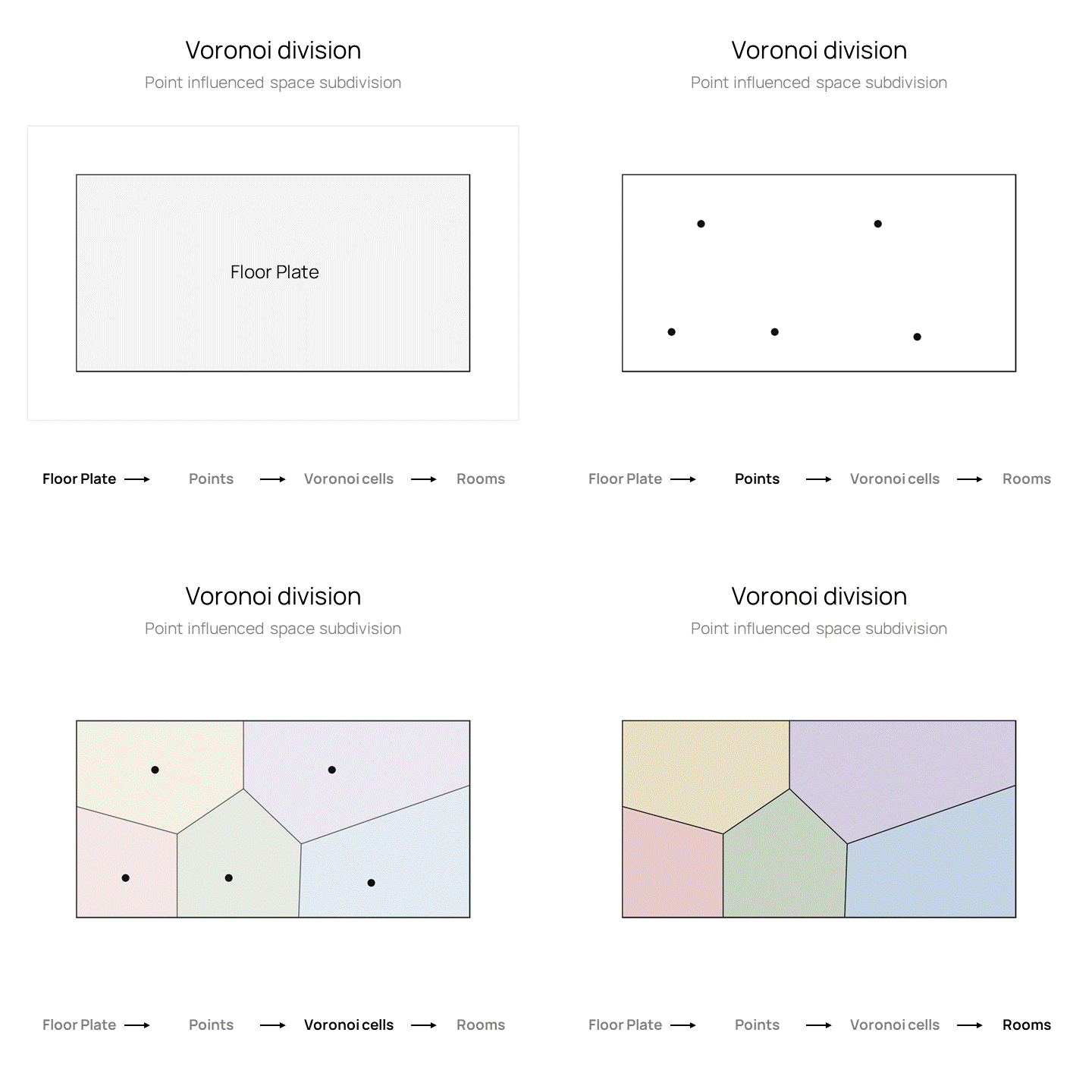
Voronoi subdivision operates on a different principle.
Instead of dividing space directly, a set of points is placed within the floor plate. Each point defines a region consisting of all locations closer to that point than to any other. The result is a set of irregular polygons.
This method produces less predictable layouts. The shapes are not constrained to rectangles, and the boundaries respond to the relative positions of the points.
Such an approach can be useful when spatial organization needs to respond to specific influences, such as activity centers or external conditions. However, additional constraints are usually required to make the resulting regions suitable for practical use.
© Naveen Maria Fleming / ArchitectsWhoCode
From Subdivision to Architectural Space
At this stage, all methods produce only geometric regions. These regions do not yet function as architectural spaces. To move beyond this, several additional steps are required.
First, each region must be assigned a function. Without this, the subdivision remains abstract.
Second, constraints need to be introduced. These may include minimum sizes, access requirements, or other basic conditions that define whether a region can function as a usable space.
Third, relationships between regions must be considered. Adjacency, connectivity, and circulation all play a role in determining how spaces work together.
Only after these layers are added can the subdivided regions begin to resemble a coherent spatial layout.
Observations
Each method has distinct characteristics.
1. Binary partitioning produces clear and controlled layouts but can become repetitive.
2. Recursive subdivision reflects program hierarchy but may require careful management to avoid fragmentation.
3. Grid-based subdivision provides consistency and ease of control but can be rigid.
4. Voronoi subdivision introduces variation but lacks predictability.
No single method is sufficient on its own. Their value lies in how they structure the initial stages of spatial organization.
Looking Ahead
The next step is to connect these subdivision methods with structured building data and evaluation logic.
At present, the output of these algorithms is purely geometric. The regions represent potential spatial divisions, but they do not carry any meaning beyond their shape and position. To make them useful in an architectural context, they need to be linked with additional layers of information.
One direction is to relate these subdivided regions to building data models such as IFC. This would allow each region to correspond to actual spatial elements within a project, rather than remaining as abstract geometry.
Another important layer is the representation of relationships. Once spaces are defined, their connections can be described in terms of adjacency, access, and hierarchy. Representing these relationships in a structured way makes it possible to move beyond isolated regions and begin working with spatial systems.
Finally, evaluation rules can be introduced. These may include constraints such as minimum dimensions, access requirements, or basic compliance conditions. At this stage, the system does not need to be fully automated. Even simple checks can begin to demonstrate how generated spatial layouts can be assessed systematically.
Taken together, these steps move the work from a visual exploration toward a more analytical framework. The subdivision is no longer only a way of generating layouts, but also a way of structuring information that can be examined, compared, and refined.
Conclusion
Space subdivision methods provide a structured way to approach early-stage spatial organization. They do not replace the role of the designer, but they offer a way to formalize and explore spatial logic.
By separating the act of dividing space from the act of assigning meaning, these methods make it possible to examine the underlying structure of a layout more clearly.
This distinction becomes particularly useful when working with computational tools, where clarity and consistency are essential.