Introduction
Design has always involved making choices. What has changed today is the number of variables we need to consider. A single project might involve spatial efficiency, user movement, structural logic, environmental performance, and even economic value all at once.
Relying only on intuition in such situations is often not enough. Designers need a way to test ideas, compare options, and understand the impact of their decisions.
This is where optimisation comes in. And more importantly, this is where parametric design becomes useful. By setting up relationships and constraints, designers can move beyond static drawings and start working with systems that respond, adapt, and evolve.
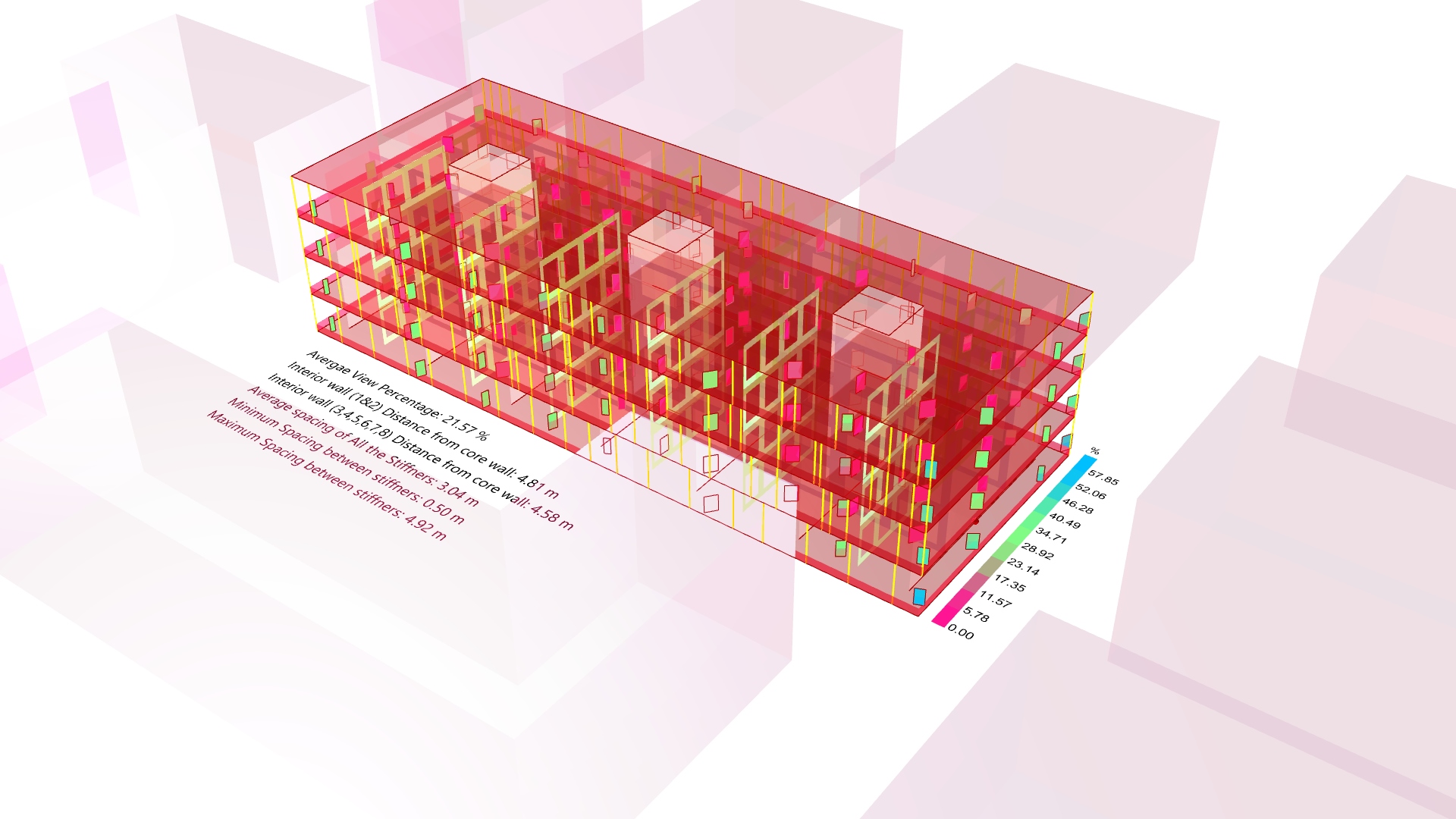
© Naveen Maria Fleming / ArchitectsWhoCode
What is optimisation in design?
At its core, optimisation is about improving a design based on specific goals.
These goals are rarely singular. In most cases, they overlap and sometimes even conflict. For example:
- Increasing usable area might affect circulation quality
- Improving daylight might lead to higher heat gain
- Opening up views might reduce privacy
Optimisation helps designers navigate these trade-offs. Instead of committing to one idea too early, it allows exploration of multiple options and supports choosing a solution that performs better overall.
Understanding parametric constraints
Parametric constraints are simply the rules that define how a design behaves.
They can be as straightforward as:
- maintaining a minimum distance between elements
- controlling proportions or dimensions
- aligning elements based on orientation
- enforcing functional requirements
Once these rules are defined, the design becomes responsive. Change one parameter, and related elements adjust automatically.
This shifts the role of the designer. Instead of manually editing each component, you are setting up a system that generates and adapts solutions.
From intuition to informed decisions
Design intuition is valuable. It comes from experience, observation, and practice. But when a project involves many interdependent factors, intuition alone can become unreliable.
Parametric systems support decision-making in a different way. They allow:
- quick testing of multiple variations
- immediate feedback when something changes
- clearer understanding of relationships within the design
This doesn’t replace intuition it strengthens it. Decisions are still made by the designer, but they are now backed by visible logic and measurable outcomes.
Balancing multiple design factors
One of the most difficult parts of design is managing competing priorities.
A few common examples:
- maximising floor area while keeping circulation comfortable
- opening up a façade while controlling glare and heat
- improving visibility without compromising privacy
These are not problems with single answers. They require negotiation.
Parametric constraints allow these factors to exist within the same system. Designers can test different scenarios, adjust priorities, and see how changes affect the overall outcome. This makes trade-offs more transparent and decisions more grounded.
The role of iteration
Optimisation is not about finding a perfect solution in one attempt. It is a process of gradual improvement.
Parametric tools make this process much more efficient. Designers can:
- generate several options in a short time
- compare their performance
- refine rules and constraints based on results
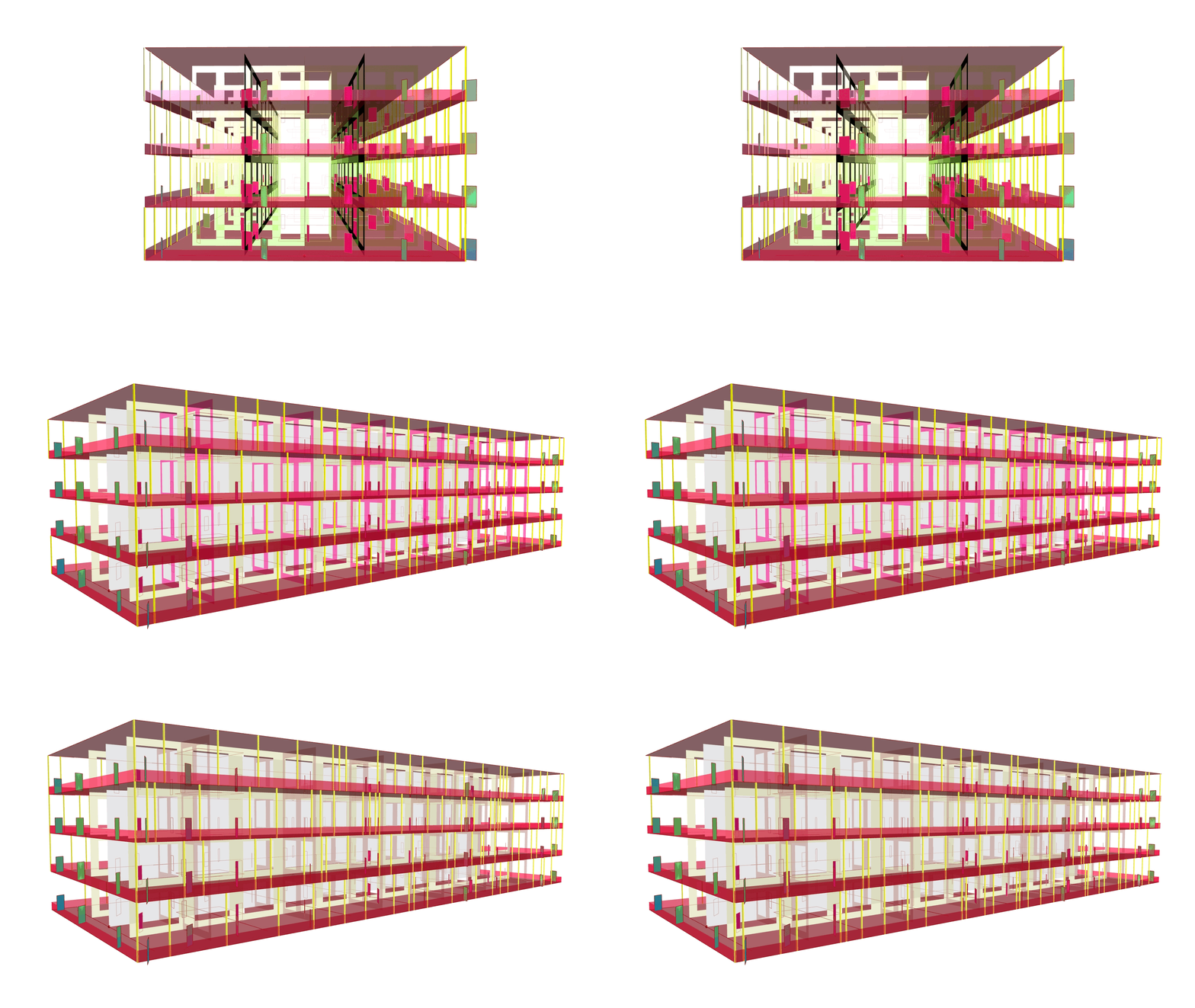
This cycle of testing and refining often leads to solutions that would be difficult to arrive at through manual methods alone.
© Naveen Maria Fleming / ArchitectsWhoCode
Conclusion
As projects become more complex, the need for structured decision-making becomes more important. Optimisation provides that structure, and parametric constraints make it practical.
By working with systems instead of fixed outputs, designers gain the ability to explore, test, and refine their ideas with greater clarity. The outcome is not just a better-performing design, but a more thoughtful and informed design process.
References
- Elements of Parametric Design. Routledge, 2010.
A key text explaining the logic and application of parametric thinking in design. - AAD Algorithms-Aided Design. Architectural Press, 2006.
Explores how algorithmic processes influence architectural design and decision-making. - The Function of Form. Actar Publishers, 2009.
Examines performance-driven design and the relationship between form, behaviour, and context. - McKinsey & Company. The Business Value of Design (2018).
Discusses how structured, data-informed decision-making improves outcomes in complex systems. - Rhinoceros 3D and Grasshopper 3D. Robert McNeel & Associates.
Industry-standard tools widely used for parametric modelling and optimisation workflows in architecture